
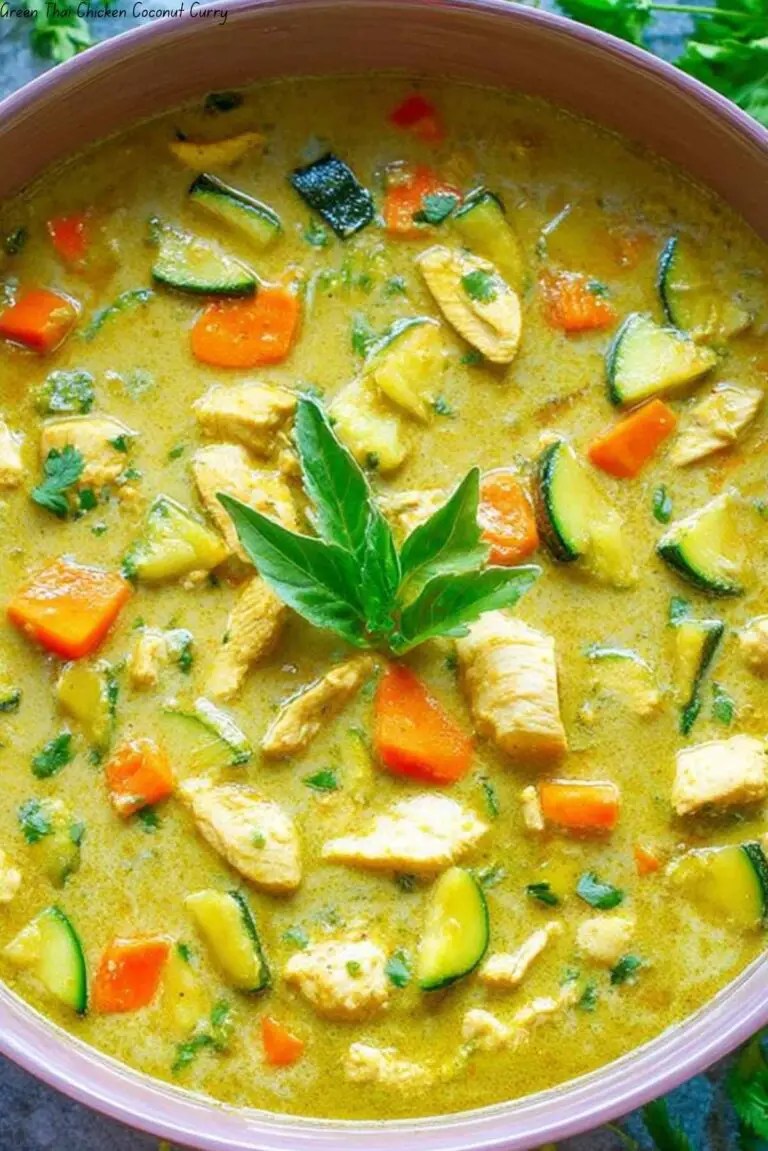
Curry intimidates a lot of home cooks. The ingredient lists look long, the flavors seem complex, and there’s always that worry it’ll end up watery or bland. This green Thai chicken coconut curry cuts through all of that. It’s built on a handful of pantry staples, comes together in one skillet, and delivers a sauce so fragrant and creamy you’ll want to spoon it over everything on your plate.
The foundation is a good green curry paste — the kind that smells like lemongrass, galangal, and green chiles the second you open the jar. From there, coconut milk smooths everything out, fresh vegetables add texture, and a squeeze of lime at the end wakes it all up. It’s the kind of dinner that feels special without requiring a special occasion.
What Makes This Work
One pan, minimal cleanup. Everything happens in a single large skillet. Sauté, simmer, serve. The rice cooks separately and that’s your only other dish.
Flexible heat level. The recipe calls for 2 to 8 tablespoons of curry paste, which is a wide range on purpose. Start with 2 if you’re cautious, go up to 8 if you want your nose to run. You control the spice.
Vegetables that actually cook properly. Carrots and zucchini hold their shape and texture without turning mushy. They absorb the sauce while keeping a little bite.
Ingredients
For the curry:
- 2 to 3 tablespoons coconut oil (olive oil works if that’s what you have)
- 1 medium/large sweet Vidalia or yellow onion, diced small
- 1 to 1.25 pounds boneless skinless chicken breast, diced into bite-sized pieces
- 3 cloves garlic, finely minced or pressed
- 2 to 3 teaspoons ground ginger or 1 tablespoon fresh ginger, finely chopped
- 2 teaspoons ground coriander
- One 14-ounce can coconut milk
- 1 to 1 1/2 cups shredded carrots
- 1 large zucchini, diced into bite-sized pieces
- 2 to 8 tablespoons Thai green curry paste
- 1 teaspoon kosher salt
- 1/2 teaspoon freshly ground black pepper
- 1 to 2 tablespoons lime juice
To finish:
- Fresh cilantro (or basil if cilantro isn’t your thing)
- Granulated sugar, optional, if you want to round out the heat
To serve:
- Rice, jasmine or basmati, or naan bread
How to Make It
Step 1: Sauté the aromatics Heat your coconut oil in a large skillet over medium heat. Add the diced onion and cook until translucent and soft, about 5 minutes. You want it sweet and mellow, not browned. Add the minced garlic, ginger, and ground coriander. Stir for 30 seconds until fragrant — this is where your kitchen starts to smell incredible.
Step 2: Brown the chicken Add the diced chicken breast to the skillet. Spread it out in a single layer and let it cook undisturbed for a minute or two so it gets some color. Stir and cook until the chicken is no longer pink on the outside. It doesn’t need to be fully cooked through yet — it’ll finish in the sauce.
Step 3: Build the curry base Add the shredded carrots, diced zucchini, and green curry paste. Stir everything together so the vegetables are coated in the paste and the chicken is evenly distributed. This is where you want to be generous with the curry paste — it’s carrying most of the flavor load. Mae Ploy and Aroy-D are widely recommended brands for authentic flavor, but use whatever you can find and adjust to taste.
Step 4: Simmer in coconut milk Pour in the entire can of coconut milk. Season with kosher salt and black pepper. Bring to a gentle simmer, then reduce the heat to low and let it bubble away for 10-15 minutes. The sauce will thicken slightly, the vegetables will tenderize, and the chicken will cook through. Stir occasionally to prevent sticking. If the sauce looks too thick, add a splash of water or chicken broth. If it’s too thin, let it simmer uncovered a bit longer.
Step 5: Finish and adjust Stir in the lime juice. Taste the sauce and adjust — more lime if it needs brightness, a pinch of sugar if the heat is too aggressive, more salt if it tastes flat. The balance should be creamy, savory, slightly spicy, and tangy. Garnish with fresh cilantro or basil. Serve hot over jasmine rice or with warm naan for scooping.
Tips That Actually Help
Bloom your curry paste. Before adding the coconut milk, push the chicken and vegetables to the sides of the pan and let the curry paste sizzle in the oil for 30 seconds. Toasting the paste deepens its flavor and gets rid of any raw edge. This is a key technique for getting the most out of store-bought paste.
Use full-fat coconut milk. Lite coconut milk works in a pinch but the sauce won’t be as rich or creamy. The fat in full-fat coconut milk carries the spice and creates that luxurious texture.
Cut everything evenly. Dice your chicken and zucchini into similar-sized pieces so they cook at the same rate. Bite-sized is the goal — small enough to eat in one forkful but not so small they disappear into the sauce.
Don’t skip the lime at the end. It seems like a small thing but that acid cuts through the richness and makes all the flavors pop. Without it, the curry tastes flat and heavy.
Let it simmer longer if you have time. The recipe says 10-15 minutes but if you can let it go 20-25, the flavors deepen and the sauce thickens more. Just keep the heat low and stir occasionally.
Ways to Change It Up

Protein swaps: Chicken thighs are juicier and more forgiving than breast. Tofu cubes or chickpeas make this vegetarian — just add them with the vegetables so they absorb the sauce.
Different vegetables: Bell peppers, snap peas, eggplant, or spinach all work. Add heartier vegetables like carrots early, delicate ones like spinach at the very end.
More heat: Fresh sliced Thai chiles or a drizzle of chili oil on top. Or just use more curry paste.
Make it a soup: Add an extra can of coconut milk and a cup of chicken broth. Serve with rice noodles instead of over rice.
What to Serve With It
Jasmine rice is the classic choice — its subtle fragrance complements the curry without competing. Basmati works too if that’s what you have. Naan bread is great for scooping up every last drop of sauce. A simple cucumber salad dressed with rice vinegar and a pinch of sugar provides a cool, crisp contrast. For drinks, a mango lassi or Thai iced tea is traditional, but a cold beer works just as well.
Storing and Reheating
Leftovers keep in an airtight container in the fridge for up to 3 days. Reheat gently on the stovetop over low heat, adding a splash of coconut milk or water to loosen the sauce if it’s thickened. The microwave works too — just heat in short bursts and stir between each one.
Can you freeze it? Not recommended. Coconut milk tends to separate and get grainy when frozen and thawed. The texture suffers and the sauce breaks. Just make a fresh batch — it’s quick enough anyway.
Questions You Might Have
Can I use chicken thighs instead of breast? Yes, and they’re arguably better. Thighs stay juicier and have more flavor. Just dice them the same size and cook until they reach 165°F internally.
How spicy is this with 2 tablespoons of paste? Mild to moderate, depending on your brand. Mae Ploy and Maesri tend to be spicier than Thai Kitchen. Start with 2, taste, and add more if needed. You can always add, you can’t subtract.
Is fresh cilantro necessary? It adds a bright, herbal finish that balances the richness, but basil is a great substitute. If you hate both, skip the garnish — the curry stands on its own.
Can I make this vegetarian? Absolutely. Swap the chicken for firm tofu cubes or a can of drained chickpeas. Use vegetable broth if you need to thin the sauce. The curry paste itself usually contains shrimp paste, so check the label if you’re strictly vegetarian or vegan.
What if my curry is too watery? Simmer it uncovered for a few extra minutes to reduce. Or make a slurry with 1 teaspoon cornstarch and 2 tablespoons water, stir it in, and cook until thickened.
The Bottom Line
This green Thai chicken coconut curry is weeknight cooking at its best. It relies on a quality curry paste and good technique rather than a mile-long ingredient list. The result is creamy, aromatic, and deeply satisfying — the kind of meal that makes you slow down and actually enjoy dinner. Serve it over rice, grab a spoon, and don’t leave any sauce behind.
Storage and Reheating Tips:
Store any leftover curry in the fridge and reheat gently on the stovetop to maintain its creamy texture and flavors. Add a splash of coconut milk if needed.
Frequently Asked Questions:
- Can I use chicken thighs instead of chicken breast? Yes, chicken thighs will work well in this recipe.
- Is it necessary to use fresh cilantro for garnishing? Fresh cilantro adds a burst of flavor, but basil can be used as a substitute.
- Can I freeze this curry? It is not recommended to freeze due to the coconut milk separating upon thawing.
- How can I make this dish vegetarian? Substitute the chicken with tofu or chickpeas for a vegetarian option.
Conclusion:
Don’t miss out on trying this Green Thai Chicken Coconut Curry recipe that is sure to become a favorite in your household. Share your experience with us and enjoy the delicious flavors of this comforting dish!
Print
Green Thai Chicken Coconut Curry
- Prep Time: 15 mins
- Cook Time: 25 mins
- Total Time: 40 mins
- Yield: 4 servings 1x
- Category: Main-course
- Method: Stovetop
- Cuisine: Thai
- Diet: Gluten Free
Description
This Green Thai Chicken Coconut Curry is a flavorful and creamy dish with a perfect balance of spices and coconut milk. The tender chicken, veggies, and aromatic herbs make it a delightful meal for any occasion.
Ingredients
Main Ingredients:
- 2 to 3 tablespoons coconut oil
- 1 medium/large sweet Vidalia or yellow onion, diced small
- 1 to 1.25 pounds boneless skinless chicken breast, diced into bite-sized pieces
- 3 cloves garlic, finely minced or pressed
- 2 to 3 teaspoons ground ginger or 1 tablespoon fresh ginger, finely chopped
- 2 teaspoons ground coriander
- one 14-ounce can coconut milk
- 1 to 1 1/2 cups shredded carrots
- 1 large zucchini, diced into bite-sized pieces
- 2 to 8 tablespoons Thai green curry paste
- 1 teaspoon kosher salt
- 1/2 teaspoon freshly ground black pepper
- 1 to 2 tablespoons lime juice
Instructions
- Saute Onion and Garlic: Heat oil in a large skillet, saute onion until translucent, add garlic, ginger, and coriander.
- Cook Chicken: Add chicken, cook until no longer pink.
- Add Veggies and Curry Paste: Stir in carrots, zucchini, and green curry paste.
- Pour Coconut Milk: Add coconut milk, season with salt, pepper, and simmer.
- Finish and Serve: Stir in lime juice, adjust seasoning, garnish with cilantro, and serve over rice or with naan.
Notes
- You can adjust the spiciness by using more or less curry paste.
- Feel free to add other vegetables like bell peppers or peas.
- For a vegetarian version, substitute chicken with tofu or chickpeas.
Nutrition
- Serving Size: 1 bowl
- Calories: 350 kcal
- Sugar: 5 g
- Sodium: 600 mg
- Fat: 20 g
- Saturated Fat: 15 g
- Unsaturated Fat: 5 g
- Trans Fat: 0 g
- Carbohydrates: 15 g
- Fiber: 4 g
- Protein: 25 g
- Cholesterol: 80 mg
… [Trackback]
[…] Find More here to that Topic: recipecoo.com/green-thai-chicken-coconut-curry/ […]
… [Trackback]
[…] Find More to that Topic: recipecoo.com/green-thai-chicken-coconut-curry/ […]
… [Trackback]
[…] Read More on that Topic: recipecoo.com/green-thai-chicken-coconut-curry/ […]
… [Trackback]
[…] Information on that Topic: recipecoo.com/green-thai-chicken-coconut-curry/ […]